What GLP-1 Weight Loss Does to Your Skin
The weight comes off faster than the skin can follow. Nobody mentions that part at the start, and it arrives around month three as dryness that no cream fixes and a face that looks a little deflated in photographs.
GLP-1 medications have changed what weight loss looks like for a great many people, and I am seeing the results of that in the treatment room. Not as a problem, but as a new set of skin concerns arriving in people who did not have them a year ago.
It is not a sign anything has gone wrong. It is what happens when the body changes faster than the tissue covering it, and it responds well to being treated properly.
What actually changes
Five things turn up consistently, usually together.
Dryness and dehydration. The most common by a distance, and the one people notice first. Skin feels tight regardless of what they moisturise with.
Reduced firmness. Fat pads in the face thin and shift, and the skin over them does not contract at the same rate. This is why weight loss can read as ageing in the face even when it is doing everything you wanted elsewhere.
Dullness. Skin stops reflecting light the way it did, without any obvious change in texture.
More visible fine lines. Often not new lines, but existing ones without the volume underneath that was smoothing them.
Increased sensitivity. Skin that tolerated everything starts reacting, which usually means the barrier is compromised on top of everything else.
The face is the first place people notice weight loss and the first place they regret how fast it happened.

The three vitamins that matter here
Vitamin C, for brightness and firmness
Vitamin C defends against environmental stressors, supports collagen, and improves radiance. It is the most useful single active for skin that has lost firmness and gone dull at the same time, which is exactly what happens during rapid loss.
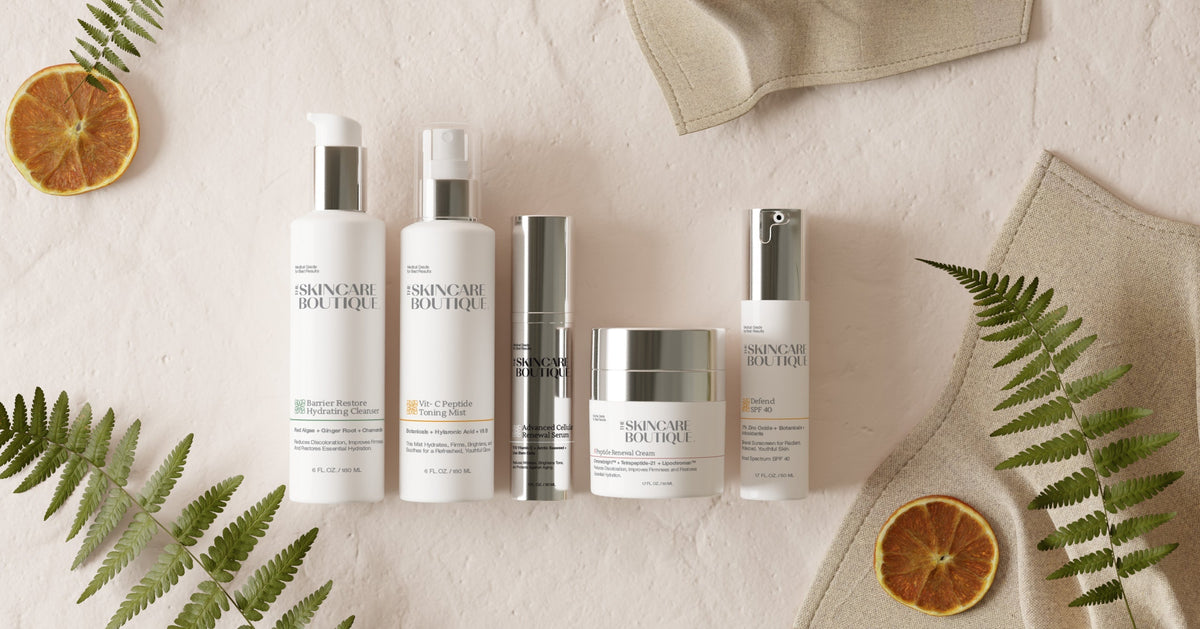
Manufacturer clinical testing on the Advanced Cellular Renewal Serum showed a 60% improvement in skin tone and radiance, a 60% reduction in the appearance of wrinkles, and a 54% improvement in elasticity.
That serum is part of The Complete Protocol, which is where I would start most people, because a serum on its own does less than a serum inside a routine that is not working against it.
Vitamin B, for hydration and barrier
If dryness is your main complaint, this is the one to focus on. Niacinamide (B3) strengthens the barrier, improves hydration, and evens tone. Panthenol (B5) replenishes moisture and calms.
The Pomegranate Enzyme Polish pairs B3 and B5 with enzyme exfoliation, so it clears the dull surface layer while replacing what the exfoliation would otherwise cost you. That combination matters on skin that is already dehydrated, where a standard scrub would make things worse.
Vitamin A, for renewal
Hydroxypinacolone Retinoate is an advanced retinoid derivative that encourages cell turnover to improve texture, soften fine lines, and support elasticity, while being considerably gentler than traditional retinol.
Gentleness is the whole point here. Skin that has become reactive during weight loss will not tolerate the retinol strength it handled a year ago, and pushing through is how people end up with a compromised barrier on top of everything else. Ultra Reparative Cream is where I use it.
The order to fix things
- 1 · Barrier first
- B3 and B5
- 2 · Then hydration
- Layer, do not just seal
- 3 · Then brightness
- Vitamin C
- 4 · Then renewal
- Gentle vitamin A
- Throughout
- Daily SPF
What skincare cannot do
I would rather be straight with you than sell you something that will not deliver.
Topical products work on the skin. They do not replace lost facial volume, and they will not tighten significantly loose skin after very substantial weight loss. What they genuinely do is improve skin quality, hydration, tone, texture, and how light falls across your face, which is a real and visible difference but a different one.
For firmness specifically, in-treatment work reaches deeper than anything you can apply. Microcurrent addresses the muscle, radiofrequency the dermis. Firmness and fine lines sets out which does what and how long each takes.
And if what is bothering you is substantial laxity rather than skin quality, a surgeon will give you a result I cannot. I will say so rather than sell you a course of facials that will disappoint you.
Where I would start you
Hydration and barrier before anything corrective. Almost everyone arriving with GLP-1 skin changes has been treating the symptom, adding richer creams to skin that is short of water rather than oil. Dry and dehydrated skin explains why that does not work.
The Complete Protocol covers all three vitamins in one routine, sequenced properly, in trial or full size. It is the system The Boutique Glow Method runs on, and the thirty-day structure suits this well, because skin changing week to week is easier to manage with a plan than with guesswork.
If you would rather have someone look first, that is The Glow Edit. Worth doing here in particular, because skin during rapid weight loss is a moving target and what it needs in month two is not what it needs in month six.
I am a licensed esthetician, not a physician. Nothing here is medical advice about GLP-1 medications, dosing, or weight loss itself, and questions about any of that belong with your prescribing doctor. I am glad to work alongside whatever care you are receiving.

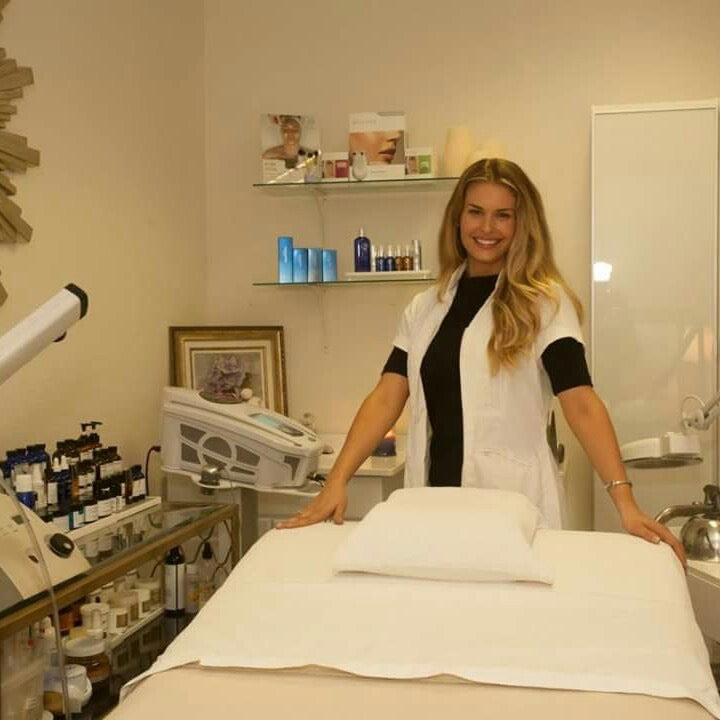
Twenty years in the treatment room, more than 500 non-surgical facelift treatments, and the founder of Organiglo. There is no front desk here and no rotating staff. You book with me, and I am the one in the room.
Let me look at where your skin is now
Skin changes week to week during weight loss. An hour with me gets you a routine that fits where you actually are, rather than where you were when you started.
Book The Glow Edit Or see The Complete Protocol
Written by Melanie White